When the weather turns cold, you may find that your wood burner suddenly smokes more when you first light it. Though it may be alarming, it’s not uncommon and is caused by something we refer to as ‘cold flue’.
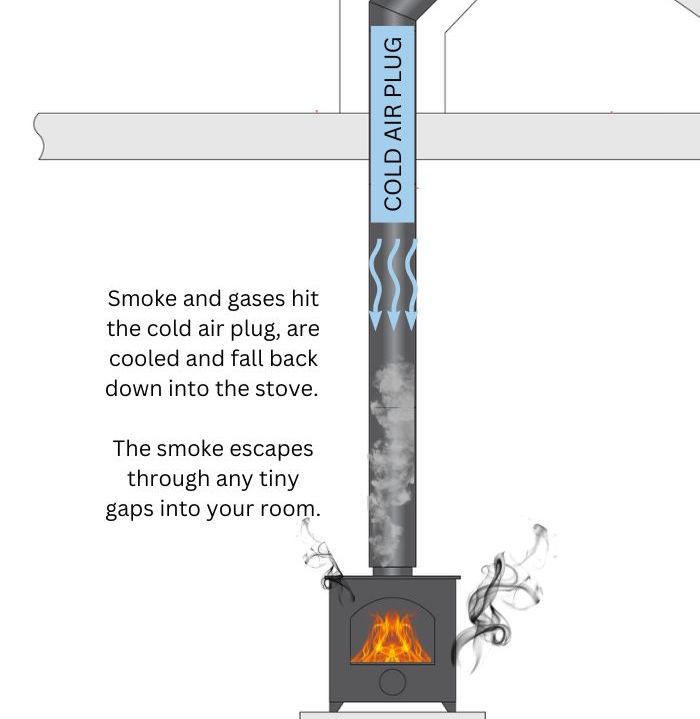
This occurs when cold air forms a plug inside your chimney that blocks smoke and gases from rising. The cold air plug can either reduce or completely obstruct normal airflow from your stove through the chimney, pushing smoke back down into your home.
The chimney doesn’t have to be left unused for long periods of time for a cold plug to form. Depending on weather conditions, it can form overnight when there is a sudden drop in temperature. However, it is more likely to occur when a fire is not used often or in twin wall flue systems that are more exposed to the elements.
How to warm your chimney.
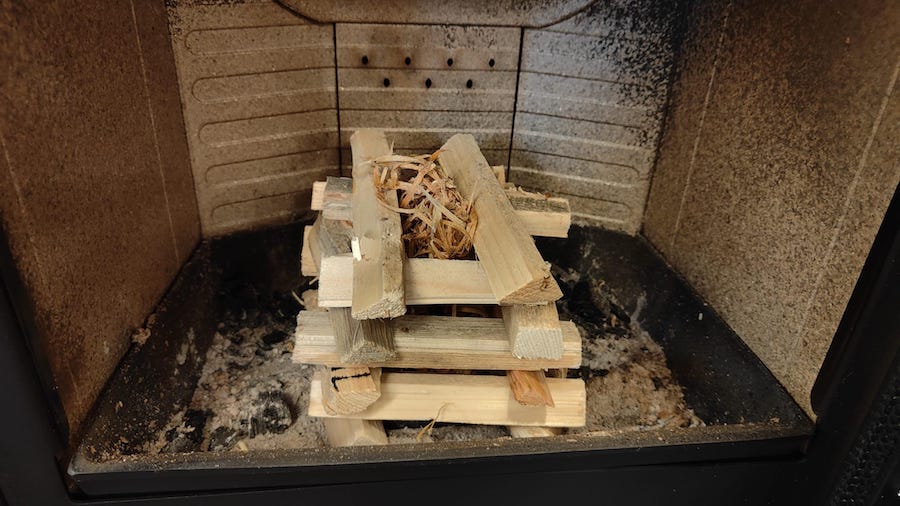
Stack kindling like jenga blocks and place firelighters at the top.
What can I do to stop the smoke?
Fortunately, there are some simple steps you can take to help reduce the effects of cold flue:
Start by opening your stove door 30 minutes before lighting your fire to help push warmer air through the chimney.
Open all of the vents on your stove.
Warm your chimney by building a small fire using kindling built in a tower like ‘Jenga blocks’, firelighters and newspaper to warm the air in your chimney.
Do not leave your stove door fully open. Instead, leave the door cracked open (on the latch) whilst the fire gets started. This will help increase the flow of air upwards and stop smoke from coming back into the room.
Ideally, you want to gently warm the internal temperature of your chimney to remove the cold air plug. By following these steps, you will reduce the risk of smoke filling your home.
When can I add logs?
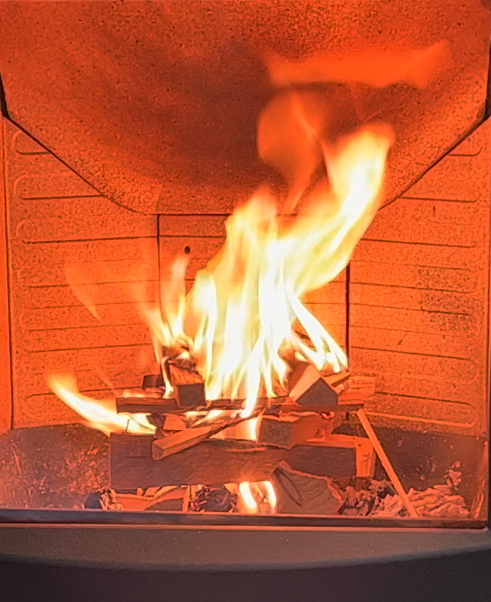
You'll know that it is safe to add logs when you see smoke being drawn up the chimney.
Start by adding very small logs to the fire, two at a time, to make sure that everything is properly warmed.
Once those have burned down, you should be able to build your fire as normal.
Taking the time to gently warm your chimney and build your fire properly can save you a lot of frustration and keep you safe when the weather turns cold.